Why is that wader white?

We all occasionally see birds with some white feathers and, unless the bird has no colouring at all (albino), we generally put the lack of colouring down to leucism – an absence of pigment in some feathers. However, it’s not that simple – there are number of different types of lack of pigment (van Grouw 2021).

Photo of a leucistic Knot amongst standardly coloured Knot at Snettisham Pits in Norfolk. Photo by Rob Pell
Two other birds with ‘white spotting’ seen on the Wash, both at Snettisham. Photos by Rob Pell
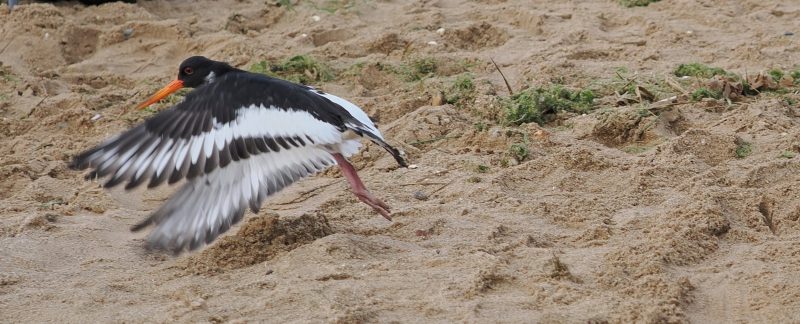
Photo of a leucistic Oystercatcher roosting with other Oystercatchers with standard plumage at Snettisham Pits in Norfolk. Photo by Rob Pell
White-spotted birds are seen regularly, but it is rare for us to know if the cause is leucism or ‘progressive greying’.
Continue Reading →

Fieldwork August 2022

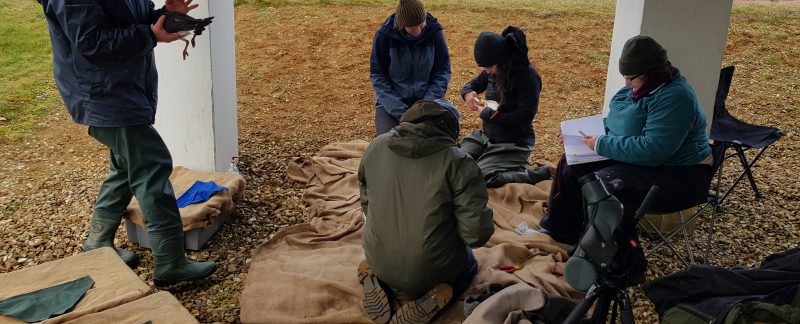
Avian Influenza (AI) precautions: With the spread of AI to wild birds (mainly colony nesters), we followed BTO guidelines and also introduced extra safety precautions to minimise risk – see here. There were also some sites we did not have access to for catching.

Friday 12 August

Recces were carried out early on Friday morning:

Norfolk: Cathy found Heacham Beach, north of the Ringed Plover fencing, was gull city with no waders present. Heacham North North at high tide had 33 Turnstone and 26 Ringed Plover.

Continue Reading →

Monitoring Bar-tailed Godwits on The Wash

Bar-tailed Godwits (Limosa lapponica) are large waders which have a wide distribution across several continents. Five subspecies are currently recognised plus a sixth recently proposed as yamalensis (Appleton 2021). Bar-tailed Godwits are long-distance migrants and one subspecies (baueri) makes an incredible non-stop migration from Alaska to New Zealand over the Pacific Ocean lasting many days.

Two populations of Bar-tailed Godwit use The Wash: lapponica breeds from northern Fennoscandia eastwards to western Russia and the Taymyr peninsula and moults on The Wash in autumn, with most birds staying to spend the winter; taymyrensis breeds further east reaching central Siberia and passes through The Wash on migration to its wintering sites, as far south as West Africa.

Continue Reading →

WWRG is changing its name!

WWRG had been operating as a Ringing Group since its inception. In consultation with its members, it was decided that becoming a charity would secure the Group’s longer-term future and allow it to take advantage of new opportunities to support our work. Alongside this we are changing our name to Wash Wader Research Group to better reflect the range of activities we do.

Continue Reading →

It was good to be back…

Our third week started with the next aerial count; this one was setting out from Cape May at 08:00 hrs. We were all on site on time and got some counts done before the plane came over at the expected time. Strangely, the plane didn’t do the second pass over Mispillion, which is the usual protocol. There were good numbers of Knot on Back Beach, so the Mispillion count team stayed out to resight there, as did the Brock team, while Cathy and Lys went out to trap the PIPLs at Fowler’s. With relatively good resighting in Mispillion through the day there were three boat trips, with the last crew leaving when it started to get dark – the rest of us ate our frittata before they got back!

Continue Reading →