Fieldwork October 2022

Tim, Selena and Dave arrived at the Norfolk base earlier in the week to work on house and garden maintenance. In particular they removed a large amount of the excess vegetation that had grown up in the garden and Dave in particular helped wire up the potential decoy store. Cathy joined them for some of the time and Mark also helped out but wasn’t able to stay on for the weekend. This team put in a significant amount of effort over these few days and so deserve a big thank you from the group!

Continue Reading →
Fieldwork July 2022

Friday 15 July

Evening recces were carried out at:

Gedney (Nigel) – the marshes were flooded 45 mins before tide with around 100 Curlew over the marsh, around 100 Redshank on the tide edge and 200–300 Black-headed Gulls on the pool.

Beaches (Guy) – Heacham North North, no birds; Heacham South c. 2,000 Oystercatchers; Snettisham beach a few Ringed Plovers and Oystercatchers, but lots of Ringed Plover fencing all along the beach making it unusable for catching. Also noted at Snetts was a Turtle Dove calling and a Spoonbill flyover.

Continue Reading →

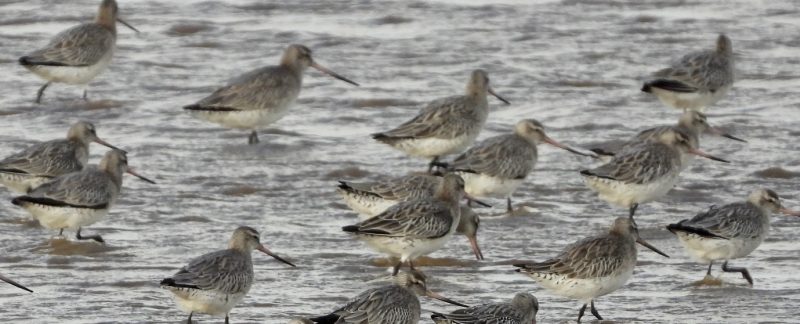
Monitoring Bar-tailed Godwits on The Wash

Bar-tailed Godwits (Limosa lapponica) are large waders which have a wide distribution across several continents. Five subspecies are currently recognised plus a sixth recently proposed as yamalensis (Appleton 2021). Bar-tailed Godwits are long-distance migrants and one subspecies (baueri) makes an incredible non-stop migration from Alaska to New Zealand over the Pacific Ocean lasting many days.

Two populations of Bar-tailed Godwit use The Wash: lapponica breeds from northern Fennoscandia eastwards to western Russia and the Taymyr peninsula and moults on The Wash in autumn, with most birds staying to spend the winter; taymyrensis breeds further east reaching central Siberia and passes through The Wash on migration to its wintering sites, as far south as West Africa.

Continue Reading →

The Norwegian Connection: a tale of two journeys

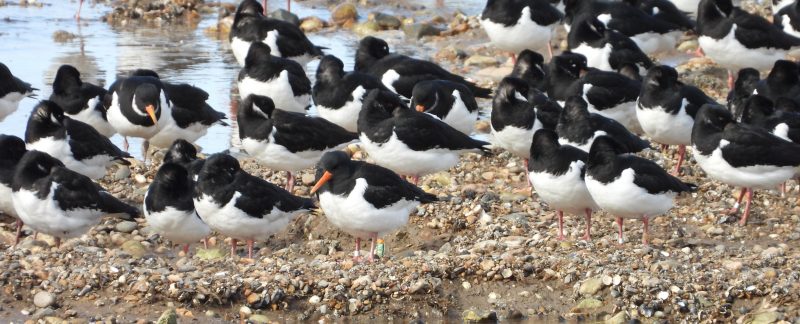
One of the most visible birds on The Wash beaches must be the Oystercatcher. With its distinctive black and white plumage, orange bill and strident ‘kleep’ call, it’s certainly hard to miss! But where do ‘our’ Oystercatchers go when they leave The Wash? The map summarises the international movements of ‘our’ Oystercatchers – the red triangles are birds ringed abroad and found on The Wash, the blue dots are birds we ringed that were found abroad. It is clear that there is a really strong connection between The Wash and Norway – which is where most of the Oystercatchers wintering on The Wash go to breed. Most of these reports are of metal-ringed birds but, in recent years, we and other groups have used colour marks and tags to track movements in greater detail, and these sometimes produce very rapid feedback.

Continue Reading →

Fieldwork February 2022

Thursday 17 February

In anticipation of the coming Storm Eunice, Kirsty arrived at the base late afternoon, opened up and replaced the dripping tap glands. Lizzie and Ryan arrived later in the evening after collecting keys from Cathy. Plans were made for recces in the morning, provided it did not look too windy.

Continue Reading →