Fieldwork September 2019

Friday 27 September

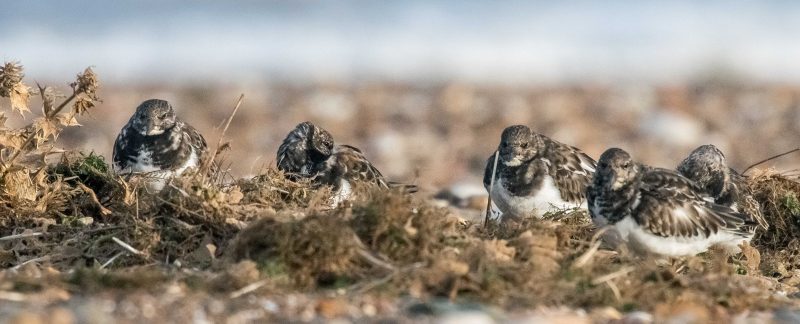
The team assembled at the fieldwork base early evening and were treated to a supper of baked potatoes with vegetables followed by blackberry and apple crumble and custard. After supper Lucy gave a briefing outlining the options for the weekend. There was no catching option for Saturday morning due to the tide so it was agreed that this would provide a good opportunity for a major resighting effort by the team. Lucy had arrived at the fieldwork base on Thursday evening in order to undertake recces over the Friday tides. Lucy had around 1,000 Oystercatchers on the rising tide along Heacham beach on Friday evening which provided a good option for a catch on Saturday evening. There was also the option of a Turnstone catch on Heacham North North beach. Lucy and the team had several considerations to take into account including Lucy’s limitations on her cannon-net licence, the small size of the team and the less than favourable weather conditions with strong winds forecast for Saturday and rain on Sunday morning.

It was decided to aim for the Oystercatcher catch on Saturday evening, partly due the lack of available colour rings for Turnstone, leaving the Turnstone catch for a weekend later in the season when we could also add colour rings to the birds caught. Teams were agreed for the resighting on Saturday morning and the team enjoyed a reasonably early night.

Continue Reading →
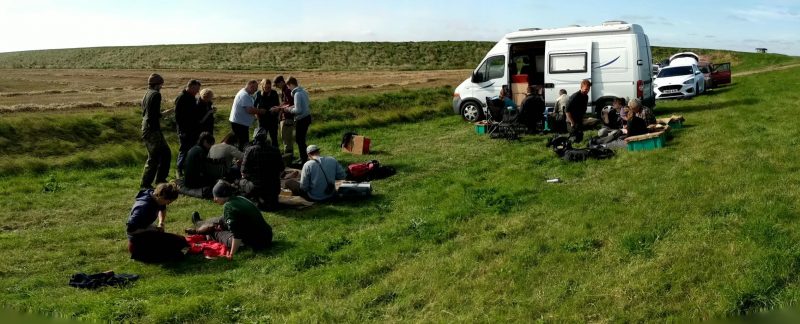
Fieldwork August / September 2019 – Norfolk

Friday 30 August

Nigel recced and found no birds on the Terrington side, so most of the team gathered in Lincolnshire where Steve had identified potential catches of Redshank and Curlew.

Saturday 31 August

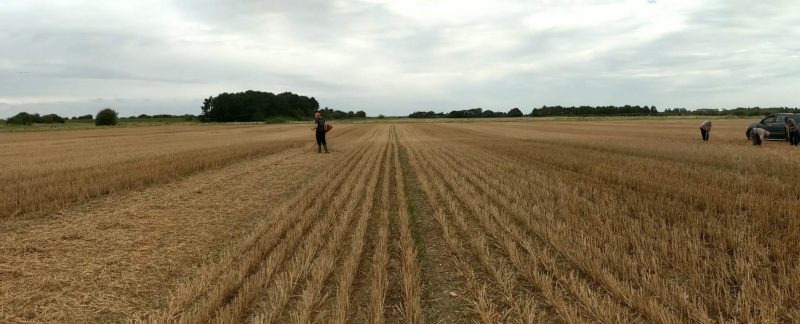
Recces: Up 05:30. Lys and Ron went to Gedney, Holbeach and Boat Mere. A field with a flock of 400 Golden Plover and 350 Ringed Plover was the highlight. The Ringed Plovers had arranged themselves in the short lines in the furrows on the field, presumably in order to get out of the wind.

Continue Reading →

Fieldwork August / September 2019 – Lincolnshire

Friday 30 August

Steve and Katharine undertook a recce of the area in advance of the team’s arrival. Horseshoe Lagoon had 160 Redshank while Friskney Island had a large flock of Knot which flew into the saltmarsh by the pool, which means it could be a potential mist netting option on a low spring set of tides.

In the early afternoon, two half nets were set on the southern corner of the Horseshoe Lagoon for Redshank (one large, one small mesh) for a catch later that evening. Upon arrival to the Lagoon, a group of 80 Redshank flew off, seemingly unrelated. Two nets (set as a clap-net pair) were set on the marsh south west of Horseshoe Lagoon (Wrangle Marsh) for Curlew following the Redshank setting with the intention to catch using this net the following morning.

Continue Reading →

WWRG in China 2019

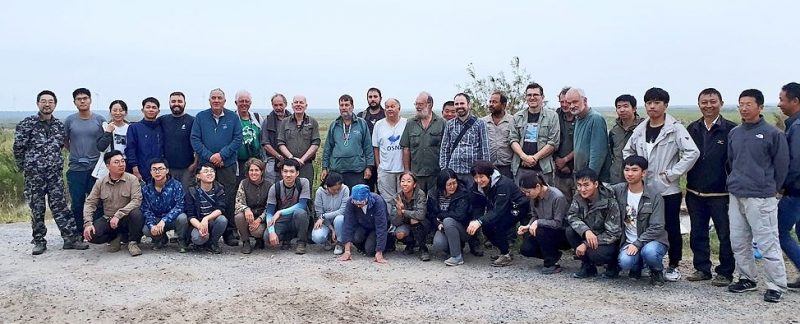
From almost the beginning of our now over 60-year history, members of the Wash Wader Ringing Group have travelled around the world to help others with wader-catching projects. Part of this work at present involves helping with work on the critically-endangered Spoon-billed Sandpiper (SBS; https://www.saving-spoon-billed-sandpiper.com/). This autumn, group members were again part of a team led by Professor Chang Quin of Nanjing Normal University, working in Jiangsu, China. The aims of this year’s autumn passage work were to catch and mark SBS, satellite tag a small number, scan flocks of SBS to work out the proportion of marked to unmarked birds to add to our estimate of the numbers of birds using the area (https://www.waderstudygroup.org/article/12026/; https://www.waderstudygroup.org/article/12091/) and to mark and measure a range of other species.

Continue Reading →

60 years young

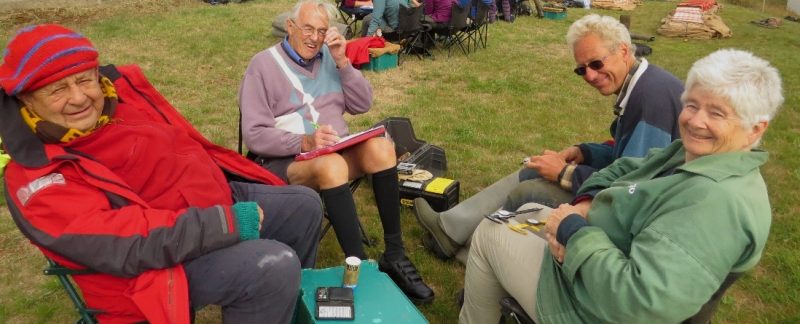
Members of the Cambridge Bird Club first started taking interest in the waders using The Wash in the early 1950s. Initially, this interest focused around monitoring and counting the wader populations in winter, but soon included catching attempts using mist nets and clap nets. The Wash Wader Ringing Group was formed during the summer of 1959 when a team, including Clive Minton, persuaded Peter Scott of the Wildfowl Trust to lend them their rocket nets to try catching large groups of waders on ploughed fields; the Group took their first rocket net catch, at Terrington in Norfolk, on 18 August 1959, exactly 60 years ago today. 

Continue Reading →