
Beyond borders: habitat use of wintering Eurasian Curlew in and around coastal SPAs
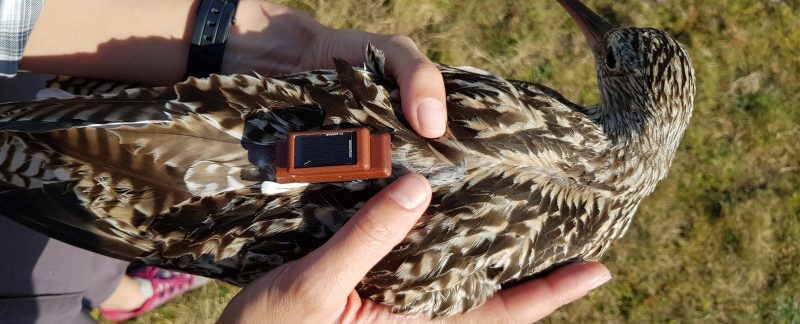
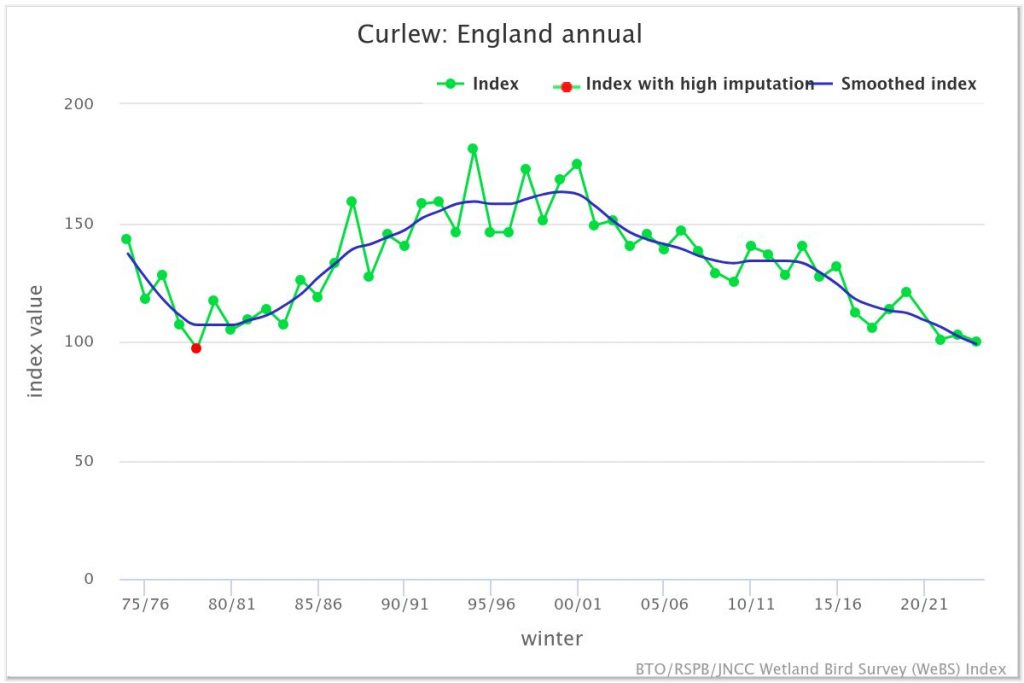
We’re pleased to announce that WWRG data will be at the centre of a new PhD opportunity jointly supervised by WWRG members Sam Franks and Katharine Bowgen at the BTO and Christine Beardsworth at Liverpool John Moores University along with Julia Nowack. This PhD will make extensive use of our Curlew ringing and tagging data, along with new fieldwork, to understand winter habitat use of this declining Red Listed species.
Special Protection Areas (SPAs) like The Wash are vitally important for wintering waterbirds including waders like Curlew, and having access to long-term datasets like those of WWRG provide an amazing chance both to understand current behaviour and link them to historic data. The Wash is the largest natural estuary (embayment) in England and during the winter hosts over 6% of the UK’s wintering Curlew population, second only to Morecambe Bay, highlighting its importance for the species. Curlew travel from across northern Europe to winter on the estuary, with birds ringed on The Wash having come from across Scandinavia and Finland as far across as western Russia.
The species making use of The Wash are also under pressure from increased recreation and development as well as facing conflicts with active fisheries. The movement ecology studied in the PhD will aid in understanding how Curlew make use of different habitats around the SPA (Functionally linked land) which are not protected. It will also help to identify pressure points on the populations to inform possible mitigation measures and provide vital data supporting the work towards the East Coast Wetlands potentially becoming a World Heritage Site.
.
The GPS tagging data available doesn’t only provide movement data, it also provides speed of movement which can be used to determine activity budgets to include in the analysis of habitat preferences. The student will also visit the sites to ‘ground truth’ the data.
The PhD is an excellent opportunity to combine long term field data from ringing, with decades of our data on longevity and biometric differences, with remote sensing data and movement data like that provided by GPS tags.
You can find more details and contact details to ask questions about the PhD through this link. The deadline for applications is 18th February at 23:59.
Thanks to Katharine Bowgen for writing this post.